Lead Discovery vs Lead Generation: What's the Difference?
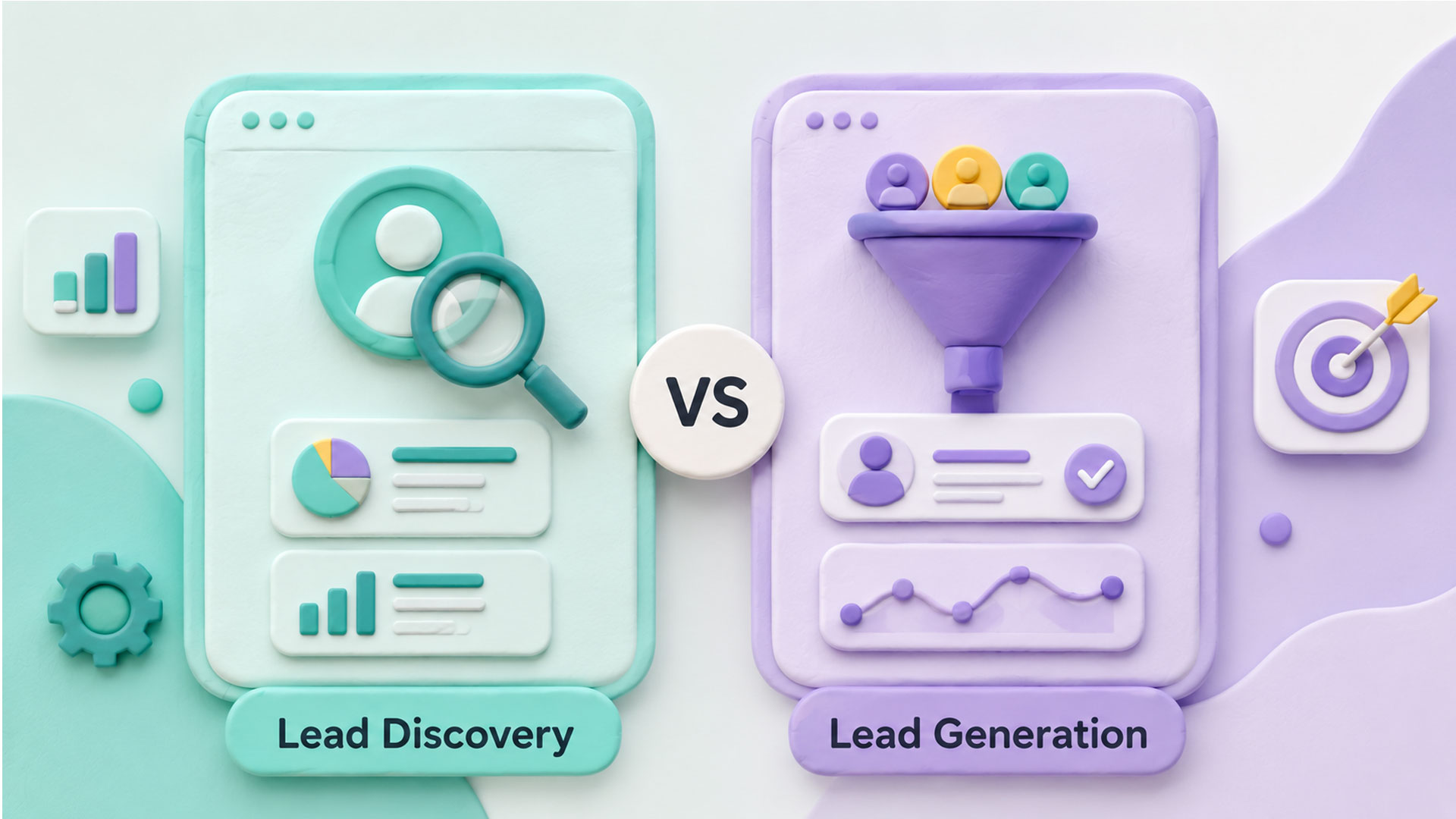
Businesses often use the terms lead discovery and lead generation interchangeably, but they represent two distinct stages of the customer acquisition process. Understanding the difference is essential for building a predictable sales pipeline, improving outreach, and focusing your efforts on the opportunities most likely to convert.
While lead generation is about attracting or collecting potential customers, lead discovery focuses on identifying the right businesses before outreach even begins. With the rise of AI-powered prospecting, lead discovery has become an increasingly important part of modern sales and business development.
If you're new to AI-powered prospecting, it's worth first understanding the broader concept of AI Lead Discovery and how it helps businesses uncover qualified opportunities more efficiently.
This guide explains the differences between lead discovery and lead generation, when to use each approach, and why combining both creates a stronger and more consistent sales strategy.
Quick Answer
Lead discovery is the process of identifying and qualifying potential customers who match your ideal customer profile, while lead generation is the process of attracting, capturing, or engaging those prospects through marketing and sales activities.
In simple terms:
- Lead Discovery answers "Who should we target?"
- Lead Generation answers "How do we engage them?"
Businesses achieve the best results when both processes work together.
Lead Discovery vs Lead Generation: At a Glance
| Lead Discovery | Lead Generation |
| Identifies qualified prospects | Attracts or captures prospects |
| Focuses on research and qualification | Focuses on marketing and outreach |
| Uses buying signals and company data | Uses campaigns, ads, SEO, and email |
| Happens before outreach | Begins after target prospects are identified |
| Prioritizes quality | Prioritizes engagement |
Although different, these two processes complement each other rather than compete.
What Is Lead Discovery?
Lead discovery is the process of finding businesses or individuals who closely match your ideal customer profile (ICP) and are most likely to need your product or service.
Rather than collecting large contact databases, lead discovery focuses on identifying high-quality opportunities based on relevance, timing, and business activity.
Modern lead discovery often relies on AI to analyze signals such as:
- Company growth
- Hiring activity
- Funding announcements
- Technology adoption
- Procurement opportunities
- Industry expansion
- Business news
These signals help businesses identify organizations that may already be entering a buying cycle.
For example, if a software company has recently expanded into a new market and is hiring multiple sales representatives, it may soon require CRM customization, marketing support, or sales enablement tools. AI can detect these patterns long before a manual search would uncover them.
What Is Lead Generation?
Lead generation is the process of attracting potential customers and encouraging them to express interest in your product or service.
Unlike lead discovery, which identifies opportunities, lead generation focuses on bringing those opportunities into your sales pipeline.
Common lead generation strategies include:
- Content marketing
- Search engine optimization (SEO)
- Paid advertising
- Social media marketing
- Email marketing
- Webinars
- Landing pages
- Events and conferences
- Referral programs
The goal is to convert anonymous visitors into identifiable leads who can then be nurtured through the sales process.
The Key Differences
Although both processes contribute to customer acquisition, they solve different problems.
Purpose
Lead discovery helps businesses determine who they should target.
Lead generation focuses on how those prospects are attracted and engaged.
Timing
Lead discovery comes first.
It identifies businesses that match your target audience before any outreach begins.
Lead generation is followed by engaging those prospects through marketing or sales activities.
Data Sources
Lead discovery uses company data, market signals, public records, hiring activity, and business intelligence.
Lead generation relies on marketing channels such as search engines, social media, advertising, and email campaigns.
Success Metrics
Lead discovery measures:
- Qualified opportunities
- ICP match
- Buying intent
- Opportunity quality
Lead generation measures:
- Leads captured
- Conversion rates
- Cost per lead
- Marketing performance
Why Businesses Need Both
A common mistake is treating lead discovery and lead generation as separate strategies.
In reality, they work best together.
Imagine launching a marketing campaign without first understanding which companies are most likely to benefit from your services.
You may generate hundreds of leads, but many won't be a good fit.
Similarly, discovering excellent opportunities without an effective outreach strategy limits your ability to convert them into customers.
A successful customer acquisition process often looks like this:
Define Your ICP → Discover Qualified Opportunities → Prioritize Leads → Launch Outreach Campaigns → Nurture Relationships → Close Customers
Each stage strengthens the next.
How AI Is Transforming Lead Discovery
Artificial intelligence has significantly changed how businesses discover potential customers.
Instead of manually searching company directories or maintaining outdated spreadsheets, AI can continuously monitor multiple data sources and identify opportunities in real time.
AI-powered lead discovery helps businesses:
- Monitor buying signals automatically
- Identify companies matching their ICP
- Prioritize high-value opportunities
- Reduce manual research
- Improve prospect quality
- Respond to market changes more quickly
Platforms like Scoutance take this a step further by monitoring more than 50 sources to help agencies, freelancers, and businesses discover relevant project opportunities and qualified leads in one place.
Which Approach Is Right for Your Business?
The answer depends on your goals.
If you're trying to identify businesses that match your ideal customer profile, lead discovery should be your starting point.
If you're looking to increase awareness, capture contact information, or nurture prospects, lead generation becomes the focus.
For most businesses, the strongest strategy combines both.
Lead discovery ensures you're targeting the right audience, while lead generation helps you build relationships and move prospects through the sales funnel.
Key Takeaways
- Lead discovery and lead generation are different but complementary processes.
- Lead discovery identifies qualified opportunities before outreach begins.
- Lead generation focuses on attracting and engaging potential customers.
- AI makes lead discovery faster by analyzing buying signals and company activity.
- Businesses that combine lead discovery with effective lead generation often build stronger and more predictable sales pipelines.
Frequently Asked Questions
Q1. Is lead discovery the same as lead generation?
No. Lead discovery focuses on identifying qualified prospects, while lead generation focuses on attracting and engaging those prospects through marketing or sales activities.
Q2. Which comes first: lead discovery or lead generation?
Lead discovery typically comes first because it helps determine which businesses or individuals are the best fit before outreach begins.
Q3. Can AI automate lead discovery?
Yes. AI can analyze company data, buying signals, hiring trends, funding announcements, and other indicators to identify qualified opportunities more efficiently than manual research.
Q4. Do small businesses need lead discovery?
Absolutely. Even small businesses, agencies, and freelancers can benefit from focusing on qualified opportunities rather than spending time researching a large number of unqualified prospects.
Q5. Why is lead discovery becoming more important?
As more business data becomes available online, manually researching prospects becomes increasingly difficult. AI-powered lead discovery helps businesses identify relevant opportunities faster while improving lead quality.